In a landmark moment for the UK funeral industry, Scotland has become the first nation within the UK to formally legalise alkaline hydrolysis — a process widely known as aquamation or water cremation. The Scottish Parliament approved the regulations on 2 March 2026, representing the biggest shift in how we handle the deceased since cremation first entered law over 120 years ago.
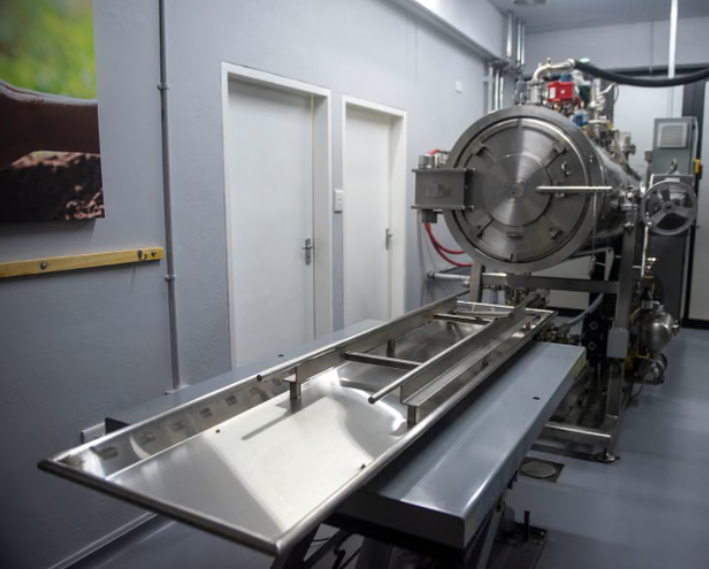
So how does it work? The process closely mirrors what happens naturally when a body decomposes in the ground, but condenses that timeline dramatically. The body is placed in a pressurised chamber filled with water and a small percentage of alkaline solution — typically potassium hydroxide — and gently heated. Within just a few hours, soft tissue is fully dissolved, leaving behind only the skeletal remains. These bones are then processed into a fine white powder, which families can keep in an urn, scatter, or inter in exactly the same way as conventional cremation ashes.
Scotland’s Public Health Minister, Jenni Minto, highlighted that end-of-life choices are deeply personal and that this development gives people a meaningful new option for the first time in well over a century.
From an environmental perspective, the appeal is clear. The process generates no direct airborne emissions and removes the need for a traditional coffin entirely. As awareness of our ecological footprint grows, many families are actively seeking funeral options that sit more comfortably alongside the sustainable values they hold in life.
Alkaline hydrolysis is already well-established internationally — permitted in nearly 30 US states, as well as Canada, Ireland, Australia, New Zealand, and South Africa. Archbishop Desmond Tutu chose it for his own funeral in 2022.
Across the rest of the UK, the Law Commission in England and Wales is currently developing a regulatory framework that would cover both hydrolysis and human composting — sometimes called terramation — signalling that broader change is on the horizon.
Industry voices are optimistic. Drawing a parallel with cremation’s own rocky introduction — which faced significant public resistance before eventually accounting for nearly 80% of UK funerals today — many expect water cremation and other greener alternatives to follow a similar trajectory as familiarity grows.
For those planning ahead, the message is simple: more choice is coming, and it’s worth knowing your options.
Are you interested in a natural, more sustainable funeral?
Right now, human composting and terramation are not legal in the UK. But we want to change that. Add your voice to our Close the Circle campaign and help more people give back to the Earth at the end of life.